Introduction
Modern windshields are more than clear panes. They are a staging area for hidden ADAS hardware that reads the road, measures distance, and keeps you centered in your lane with surprising precision, all through compact glass sensors and a tight camera mount near the mirror.
If that glass shifts or gets replaced, guidance systems can quietly drift out of aim. That is when windshield becomes the difference between smooth assistance and a scary false alert.
This guide maps where ADAS lives in your glass, explains why even tiny changes call for windshield camera calibration Tucson, and shows how Tucson drivers can protect safety features with the right calibration workflow.
Where ADAS Lives In Your Glass
The forward facing camera cluster and camera mount near the mirror
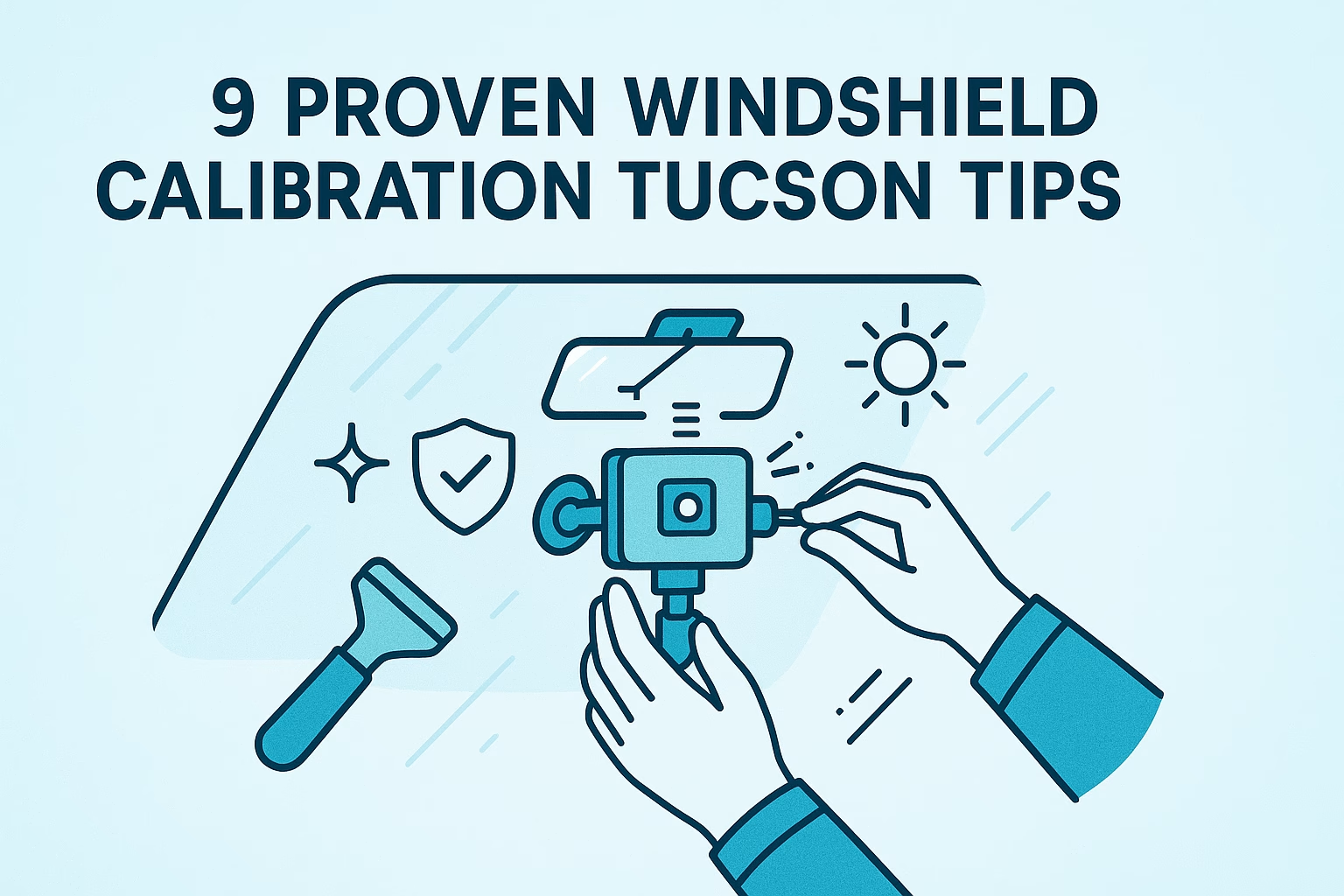
Most lane and collision support begins behind the windshield at the camera mount that anchors a forward facing camera and supporting glass sensors. If you have never seen how this hardware stacks together, explore the anatomy of a windshield to understand brackets, interlayers, coatings, and embedded tech working as a system.
Tucson drivers rely on this cluster daily, which is why windshield camera calibration Tucson is essential any time the glass or bracket is disturbed. For a wider look at sensor families and how glass positioning affects each function, review this concise overview of ADAS technologies.
Rain and light sensors bonded to the glass
Rain sensing wipers and auto headlamps use infrared based rain sensors and ambient light sensors adhered to the inside of the windshield. Poor bonding, trapped air, or contamination can throw them off. Here is a technical deep dive into how these glass sensors work and why proper seating matters in the first place: how rain sensors interpret the world.
Because these live on the glass next to the camera mount, they share the same sensitivity to glass movement, replacement, bonding issues, and contamination.
Compact integrated modules on the camera mount
Many newer vehicles consolidate the camera, heaters, fog mitigation, and additional glass sensors into one compact module fixed to the camera mount. This reduces footprint but raises the stakes. Any shift at the mount changes aim for the entire bundle that sees lane lines and traffic. The more functions packed into that module, the more important correct alignment becomes after any glass work.
Why Glass Work Changes What Your Car Sees
Tiny shifts change camera aim and sensor geometry
The bracket that holds the forward facing camera is bonded to the glass. Even slight variation in glass position or adhesive thickness during replacement can alter the camera angle and focal point. Learn why this happens and how it leads to false alerts without recalibration in this explainer on common causes of calibration issues: how glass service can nudge ADAS off target.
This is exactly why should be paired with any windshield replacement. A millimeter at the bond line can become feet of perceived error down the road.
Safety features depend on exact OEM specs
Lane keeping, adaptive cruise, and automatic braking expect the camera to live at a precise height and yaw relative to the road. When that geometry changes, software trust degrades. Windshield camera calibration Tucson restores those OEM references so the system reads distance and lanes correctly again.
- Lane keeping needs clean lane line detection at the exact horizon
- Automatic emergency braking relies on accurate object size and distance mapping
- Adaptive cruise uses a stable fusion of camera and radar where available
How Windshield Camera Calibration Tucson Works
Pre scan, static calibration with targets, and dynamic drive confirmation
A proper workflow includes a pre scan for diagnostic codes, then precise target placement on a level floor with controlled lighting for static calibration, followed by dynamic road confirmation where required. You can see how a Tucson shop sets targets and controls the environment in this service overview for ADAS calibration service in Tucson.
This is the standard that returns your camera mount and glass sensors to correct aim.
- Pre scan to capture fault codes and current camera status
- Static calibration using OEM specific targets on a leveled bay with measured distances
- Dynamic calibration on designated routes at stable speeds when the manufacturer requires a drive cycle
- Post scan to verify no active faults and to store final values
Verification, documentation, and camera mount inspection
Technicians confirm values in a scan tool, verify steering angle and alignment inputs, inspect the camera mount bond, and document results. should end with a clear report you can keep with service records.
- Mount inspection to check bracket bonding and ensure no twist or gap
- Sensor check for rain sensor pad clarity and correct coupling
- Steering angle reset where applicable to sync path prediction
- Calibration report with pass or fail notes, technician sign off, and time stamps
When To Schedule Windshield Camera Calibration Tucson
Common triggers that require recalibration
Book calibration after any of the following events. If you are unsure, err on the side of verification, since ADAS accuracy is a safety issue.
- Windshield replacement or reseal
- Camera removal or replacement
- Front end collision repair or panel repaint near sensors
- Suspension or ride height changes including spring or strut service
- Wheel alignment on vehicles that tie path prediction to steering angle
- Diagnostic code or warning related to ADAS, camera, or lane functions
- Any work that touches the camera mount or disturbs glass sensors
Symptoms that suggest miscalibration
Watch for these signs that your camera aim is off and that is due.
- Lane keeping that nudges late or early
- Ghost collision or pedestrian warnings
- Adaptive cruise distance that fluctuates erratically
- Auto high beams that behave inconsistently
- Dashboard notices that the camera is unavailable or needs service
Pairing Auto Glass Replacement With Calibration In Tucson
One coordinated visit for glass and ADAS accuracy
Choose a provider that performs replacement and calibration together so adhesive cure, bracket bonding, and camera targeting happen in sequence. This keeps the camera mount stable and avoids double handling. See how local replacement integrates with ADAS steps in this overview of auto glass replacement services.
Insurance, scheduling, and time expectations
Many carriers recognize calibration as required after glass work. Plan for in shop time to allow proper target setup on a level surface and a safe road validation.
- Insurance often covers calibration when tied to a covered windshield replacement
- Scheduling is best done early in the day to allow adhesive cure and both static and dynamic steps
- Time ranges from one to three hours depending on model and whether both procedures are required
- Deliverables include a calibration report, scan results, and notes on any sensor pad or camera mount corrections
Tucson Driving Conditions That Stress Glass Sensors
Heat, glare, and dust across desert roads
Summer heat, monsoon glare, and dust can challenge coatings and optical clarity at the camera mount and glass sensors. Regular care helps the camera see clearly between services.
- Clean the windshield inside and out with ammonia free glass cleaner
- Avoid placing stickers or toll tags near the camera cluster
- Repair chips quickly to prevent cracks that distort optics
- Keep the sensor shroud intact to shield from direct sun and dust
Night driving and rain events
Auto high beam and rain sensing systems depend on undistorted signals through the glass. If a prior repair or replacement left the sensor pad compromised, recalibration and proper rebonding restore reliable operation. Tucson monsoon bursts and rapidly changing light conditions make correct sensitivity especially important.
Quick FAQs About Glass Sensors, The Camera Mount, And Calibration
Do small rock chip repairs need calibration
Repairs that do not disturb the camera mount or the bonded sensor area usually do not need calibration. If the camera is removed or the bracket or glass near it is heated or shifted, schedule
Can mobile service deliver the same accuracy
Many calibrations require a level floor, measured target distances, and stable lighting. If your model allows dynamic only procedures, mobile may work, but in shop static steps are often needed for reliable
How long does it take and how often is it needed
Plan one to three hours depending on model and whether both static and dynamic procedures are required. Windshield camera calibration Tucson is event driven rather than time based, so schedule it whenever triggers or symptoms arise.
Conclusion
Hidden ADAS lives inside your glass at the camera mount and nearby glass sensors, which means even tiny shifts in the windshield can blur your vehicle judgment. Pair any glass work with professional windshield camera calibration Tucson and keep lane, distance, and braking support as precise as the factory intended.
Ready to protect your driver assistance features with the right workflow and documentation Use this quick form to request an appointment.
Want a seamless plan that aligns replacement and calibration Start here to map your next steps with a Tucson team that understands your glass and your sensors by visiting the ADAS calibration service page.